
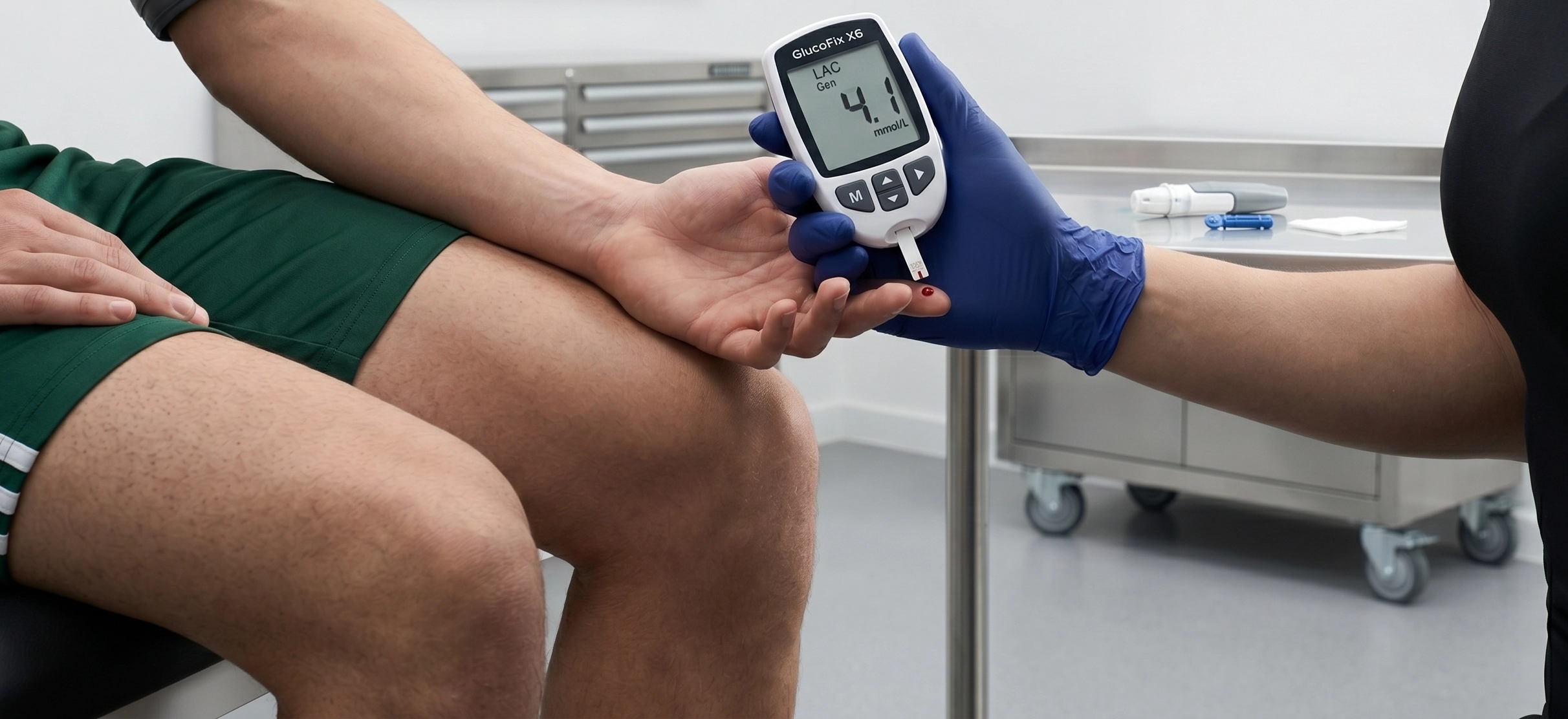
If you have spent any time in endurance coaching, sports science or elite performance environments, you will know "the numbers".
For decades, much of endurance training has been organised around two lactate markers:
- 2.0 mmol/L – commonly associated with the first lactate threshold (LT1) or aerobic threshold.
- 4.0 mmol/L – commonly associated with the second lactate threshold (LT2), OBLA (Onset of Blood Lactate Accumulation), or an estimate of maximal lactate steady state.
These values have become deeply embedded in coaching practice. They appear in training zones, laboratory reports, coach education programmes and performance-testing protocols across the world.
However, a closer look at the history of exercise physiology reveals a more complicated story. The concepts behind these thresholds emerged from several different strands of research, including clinical cardiology, respiratory physiology and sports science. Importantly, many leading researchers now recognise that fixed lactate values are practical reference points rather than universal physiological laws (Faude et al., 2009).
Understanding where these numbers came from helps explain why modern endurance athletes may benefit from a more individualised and dynamic approach.
Threshold Concepts: A Clinical Beginning
The roots of threshold testing can be traced back to the pioneering work of Karlman Wasserman and colleagues during the 1960s.
In their influential 1964 paper, Wasserman and McIlroy introduced the concept of a metabolic threshold during exercise testing in patients with cardiovascular disease (Wasserman & McIlroy, 1964). Their work focused on respiratory gas exchange rather than blood lactate measurements and aimed to identify exercise intensities that provided meaningful but safe physiological stress for clinical populations.
It is important to note that this was not the origin of the modern 2 mmol/L lactate threshold. However, it does demonstrate that threshold concepts have important roots in clinical cardiology (Sales et al., 2019).
As exercise physiology developed, threshold-based approaches were increasingly applied to healthy and athletic populations. At the same time, sports scientists began incorporating blood lactate measurements into performance testing, creating the foundations of modern lactate-threshold assessment.
Where did 4 mmol/L Come From?
The origins of the 4 mmol/L threshold are easier to trace.
In 1976, research conducted by the German Sport University Cologne introduced a fixed 4 mmol/L blood lactate reference point as part of a laboratory framework for assessing endurance performance (Mader et al., 1976). The goal was not to identify a universal biological constant, but to create a practical and reproducible marker that could be used across sports and testing environments.
Subsequent work by Kindermann, Simon and Keul (1979) helped formalise the concepts of aerobic and anaerobic thresholds and establish lactate testing as a cornerstone of endurance performance diagnostics.
A few years later, Sjödin and Jacobs (1981) introduced the term OBLA (Onset of Blood Lactate Accumulation), defining it operationally as the exercise intensity corresponding to a blood lactate concentration of 4 mmol/L. Their work demonstrated a strong relationship between running speed at OBLA and marathon performance.
Importantly, neither Mader nor Sjödin and Jacobs demonstrated that 4 mmol/L was a universal physiological threshold applicable to all athletes. Rather, it was a useful and standardised reference point that proved practical for coaches, physiologists and laboratories.
As later reviews have noted, threshold concepts are models used to interpret physiological responses rather than fixed biological laws (Faude et al., 2009; Wackerhage et al., 2022).
The Problem With Fixed Numbers
One of the major lessons from modern exercise physiology is that endurance athletes are individuals and are often, by necessity, physiologically extreme..
Endurance performance depends on a wide range of interacting factors, including:
- mitochondrial density
- muscle-fibre composition
- oxygen-delivery capacity
- lactate production rates
- lactate clearance capacity
- training history
Research has consistently shown that thresholds occur at different lactate concentrations in different individuals (Faude et al., 2009). Indeed, elite sport actively seeks out individuals able to operate at the extremes of physiological and mental performance, so this makes it all the more surprising that lactate science should work to fixed thresholds.
For example, maximal lactate steady state (MLSS) can occur at substantially different blood lactate concentrations between athletes. In some cases, highly trained endurance athletes may achieve MLSS below 4 mmol/L, while other athletes can maintain steady-state exercise at considerably higher concentrations (Heck et al., 1985).
This implies that a single threshold value should not be applied universally across all athletes. While exact threshold values vary between individuals, the broader principle is well established: athletes do not all share identical physiological thresholds, in the same way that athletes vary physically in height and build.
The challenge with fixed numbers is that they may not adequately reflect this individual variation.
Why Lactate Profiles Matter More Than Single Values
Another limitation of traditional threshold testing is that it relies on isolated measurements.
A blood lactate concentration of 3 mmol/L does not necessarily mean the same thing in every situation. The physiological context matters.
The same reading might occur:
- during a progressive warm-up
- during recovery following a high-intensity effort
- during a steady-state endurance session
- during an incremental laboratory test
The number alone provides only part of the story.
This is why many physiologists place increasing emphasis on the shape and behaviour of the lactate curve rather than focusing exclusively on individual lactate values (Faude et al., 2009). The direction of change, the rate of accumulation and the rate of clearance often provide information that a single measurement cannot.
From Snapshot Testing to Continuous Monitoring
Traditional lactate testing represented a major advance in sports science. For decades, it provided coaches and athletes with valuable insight into training intensity and endurance performance. However, conventional testing remains limited by the practical realities of blood sampling, with most laboratory protocols yielding only a small number of measurements per session.
As new technologies emerge, it may become possible to move beyond fixed threshold estimates and towards continuous monitoring of individual metabolic responses.
This shift does not invalidate the work of Mader, Kindermann, Sjödin or Wasserman. Their contributions remain fundamental to modern exercise physiology. What it does suggest is that the future of endurance training may be less about fitting athletes into predefined categories and more about understanding each athlete's unique metabolic profile.
At myRipple, we believe this represents the next step in performance science. Rather than relying solely on population-derived thresholds, continuous lactate monitoring has the potential to provide a richer picture of how an athlete produces, accumulates and clears lactate in real time.
The 2 mmol/L and 4 mmol/L thresholds helped shape modern endurance sport. They remain valuable reference points. But the next frontier may be understanding not where the average athlete sits, but where you sit.
References
- Faude, O., Kindermann, W., & Meyer, T. (2009). Lactate threshold concepts: how valid are they? Sports Medicine, 39(6), 469–490.
- Heck, H., Mader, A., Hess, G., Mücke, S., Müller, R., & Hollmann, W. (1985). Justification of the 4-mmol/L lactate threshold. International Journal of Sports Medicine, 6(3), 117–130.
- Kindermann, W., Simon, G., & Keul, J. (1979). The transition from aerobic to anaerobic metabolism. European Journal of Applied Physiology, 42(1), 25–34.
- Mader, A., Liesen, H., Heck, H., Philippi, H., Rost, R., Schürch, P., & Hollmann, W. (1976). Zur Beurteilung der sportartspezifischen Ausdauerleistungsfähigkeit im Labor. Sportarzt und Sportmedizin, 27, 80–88.
- Sales, M. M., Campbell, C. S. G., Morais, P. K., Ernesto, C., Soares-Caldeira, L. F., Russo, P., ... & Simões, H. G. (2019). An integrative perspective of the anaerobic threshold. Physiology & Behavior, 205, 29–32.
- Sjödin, B., & Jacobs, I. (1981). Onset of blood lactate accumulation and marathon running performance. International Journal of Sports Medicine, 2(1), 23–26.
- Wackerhage, H., Gehlert, S., Schulz, H., Weber, S., Ring-Dimitriou, S., & Heine, O. (2022). Lactate Thresholds and the Simulation of Human Energy Metabolism: Contributions by the Cologne Sports Medicine Group in the 1970s and 1980s. Frontiers in Physiology, 13, 899670.
- Wasserman, K., & McIlroy, M. B. (1964). Detecting the threshold of anaerobic metabolism in cardiac patients during exercise. American Journal of Cardiology, 14(6), 844–852.